
ASABE Hackathon 2022
Expertise
Platforms
Deliverables
Duration
Project Overview
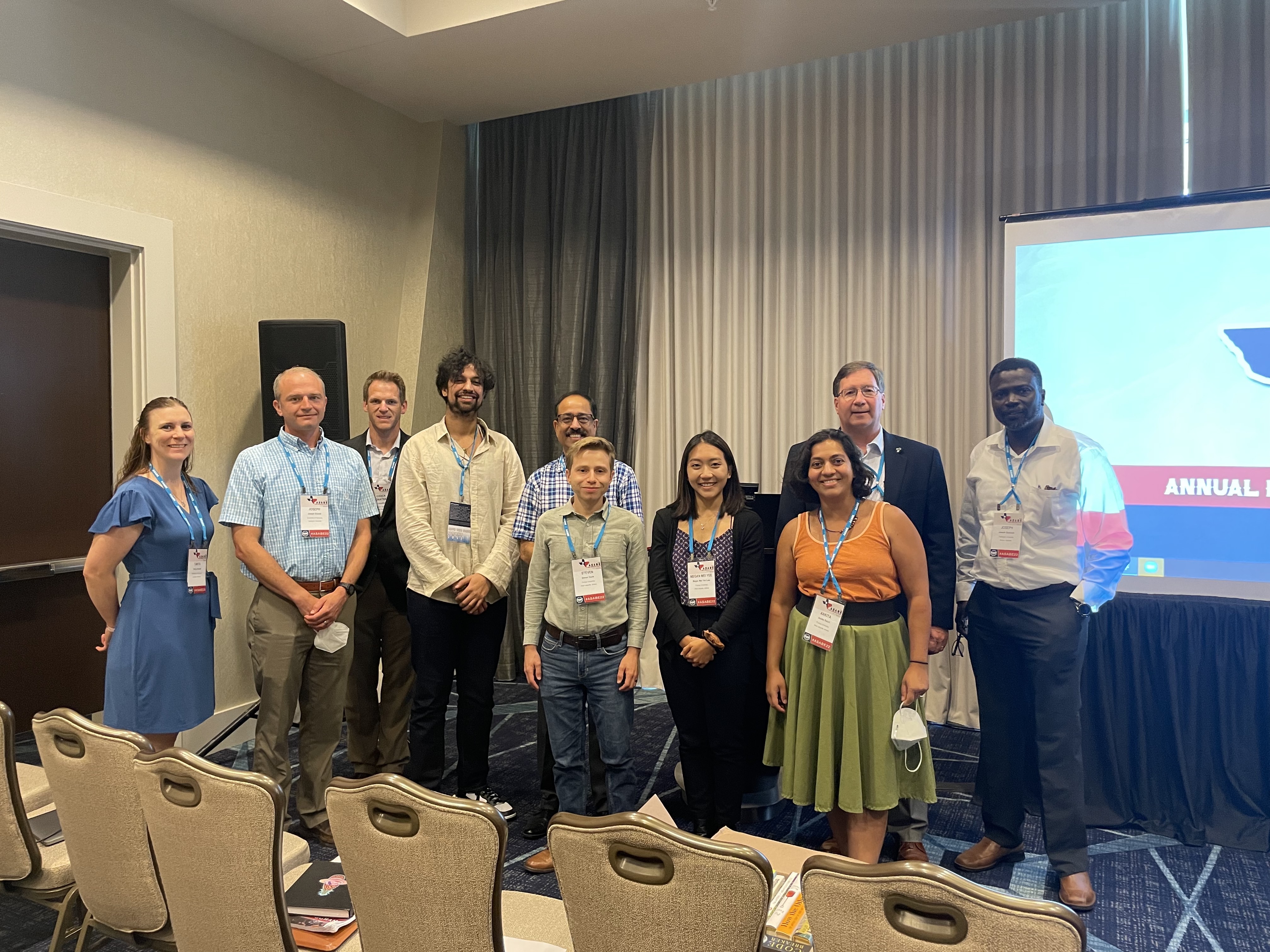
Following is a project I did for the Digital Agriculture Hackathon at the American Society of Agricultural and Biological Engineers (ASABE) 2022 Conference, in Houston, Texas. In a team of 3, we targeted the challenge of creating resilient communities through connected food systems, agriculture, and supply chains. As the designer in the team, I was responsible for creating wireframes and high-fidelity mockups of our proposed tool, in addition to applying design thinking to arrive at the solution itself.
Execution
Given the limited duration of 3 days and 2 nights, our team's major challenge lay in identifying a narrow and specific problem frame, wherein our proposal could inspire future thought and action.
The specific scenario we chose to tackle was that of patching urgent disruptions in local food security, caused by disease, supply chain shortages, and strife. A search over the internet for major issues with food security in the United States led us to focus on 2 primary areas-
- Limited reach of affordable food networks, causing isolated hotspots to form in case of disruption.
- Lack of coordination between food system actors- food banks, relief commuters, volunteers, and in-need households.
After ideating possible interventions, our digital solution targeted 3 specific goals-
- Expanding the reach of food banks.
- Optimizing food networks linking nodes of available food with in-need hotspots.
- Coordinating and managing aid efforts in one place.

Henceforth, we envisioned a distance-based clustering algorithm based on the requests for aid entered through the tool, to identify hotspots of in-need households, utilizing Google Maps API for measuring travel time and distances. Exploring this further, we became aware of the compatibility issues between the clustering algorithm and Google Maps API, and its high implementation cost. For the sake of the challenge, we demoed a less complex distance-clustering algorithm, representing our approach.

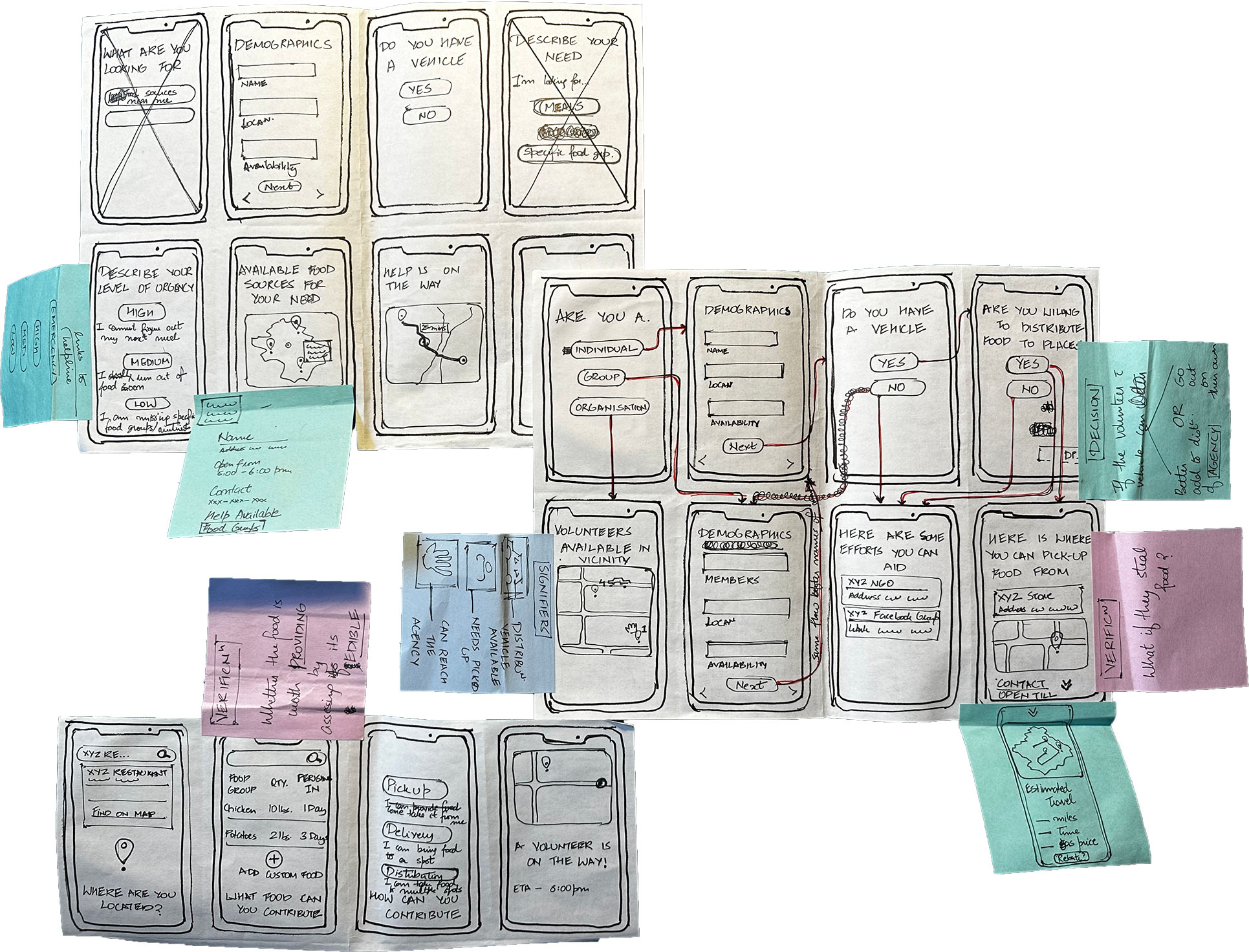
3 MVP instances of the proposed tool visualized through wireframes-
- Food-insecure hotspots accessing the portal to request aid, based on their urgency.
- The tool offers aid responses based on urgency level and distance between nodes (Source-Destination).
- Food aid networks managing volunteer efforts in-app, such as places with extra or perishable food and people willing to transport food between nodes.
Given the time constraints of the challenge, we decided to flesh out instances 1 and 2 in detail.
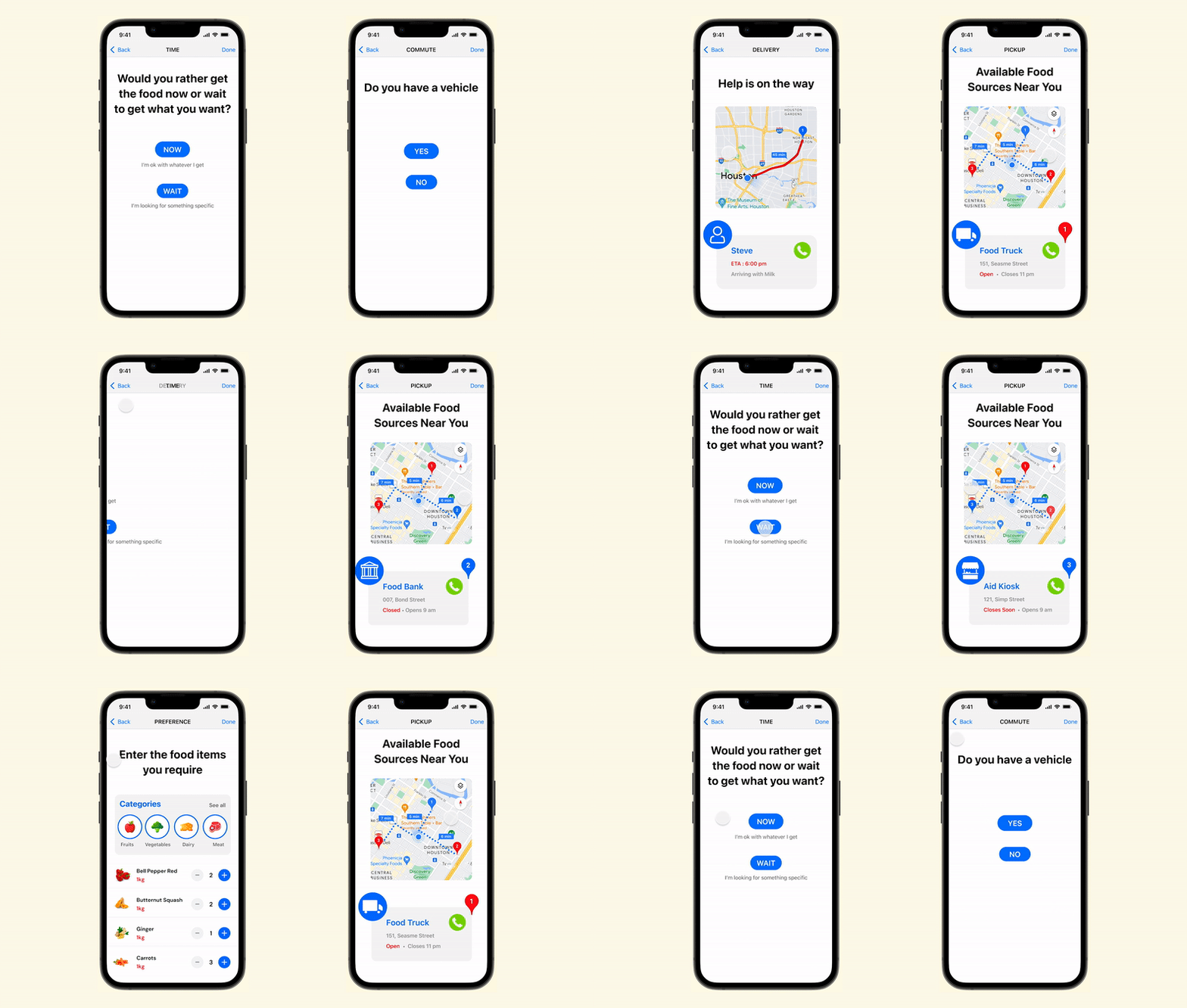
As a final deliverable, I made an interactive prototype of MVP instances in Figma, based on the iOS Design System (see project cover image).
Results
- Attempting to tackle a complex problem such as food security and distribution made us more aware of the need for multiple efforts and actors required to make a significant impact- no one app can solve such challenges by itself. Supplementing a digital platform with efforts in other areas, such as policy making, could prove more effective.
- Conducting User Research via actual users would have probably surfaced their goals and pain points with more clarity. Given the nature of the hackathon, our solutions were based on our understanding of the problem frame and involved actors, hence requiring a gut-check with real instances.
- Trying to solve multiple challenges through one tool might be overreaching- instead of the tool acting as a platform for managing volunteer efforts, a tie-up with local digital communities, such as Facebook groups, would be ideal.
The Hackathon definitely gave us a broader understanding of the food security issues and their extremes in case of a disruption. Our effort won the competition, and we were happy to create work which could inspire future efforts, as reflected in the judges' comments.