

Flashbacks
Expertise
Platforms
Deliverables
Duration
Project Overview
The following is a group project that was part of my coursework at Purdue University. In a team of 3, we were required to identify and improve upon the experience of a user tracking fitness data from tracking devices, such as an Apple Watch or Fitbit, to achieve their health goals. Specifically, we were briefed to target a 'fake-out' incident in such scenarios, i.e., a user thinking they are on the right track, yet not seeing results.
"I'm way over my daily steps; one piece of cake should be fine"
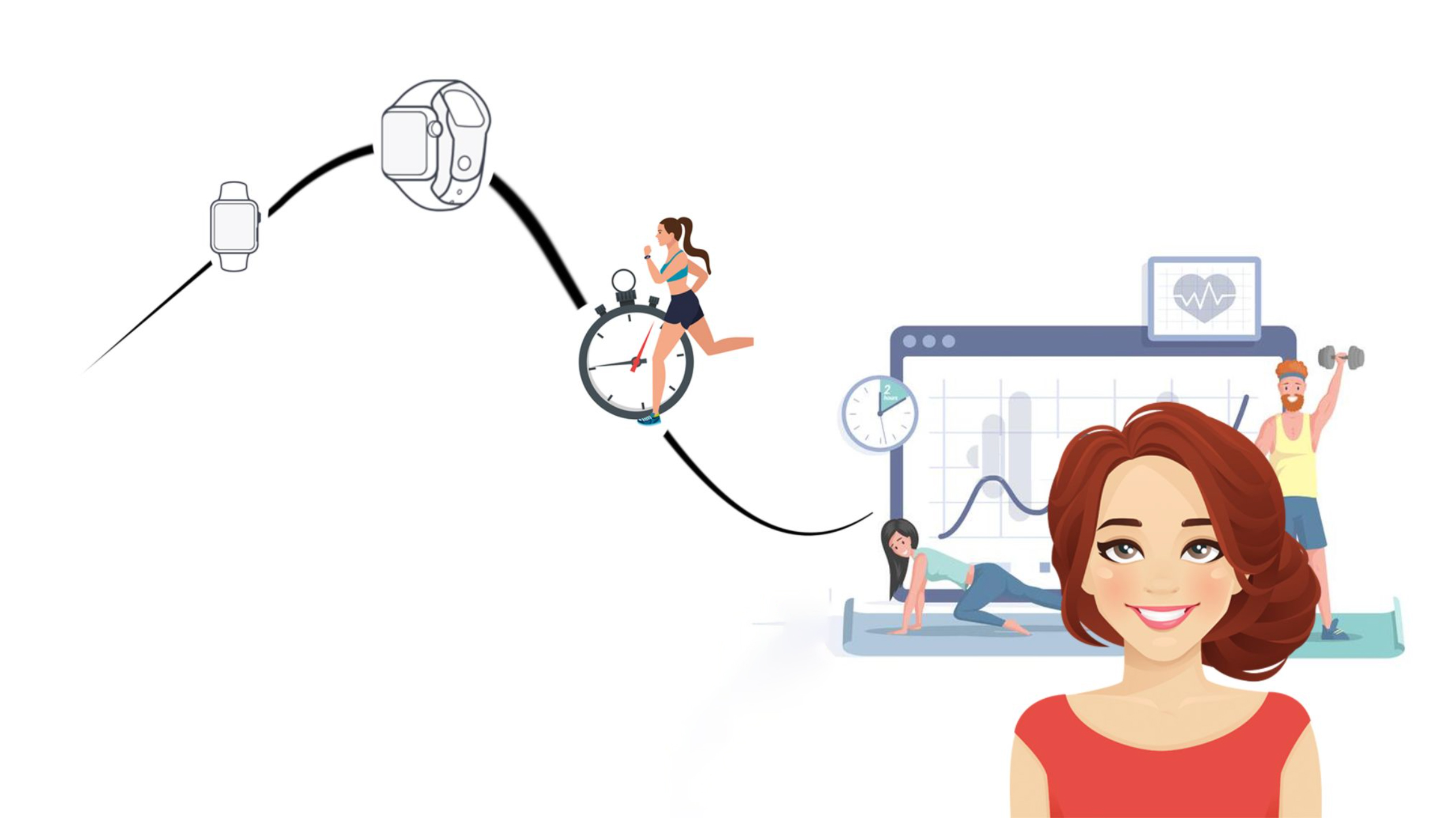
After informally conversing with students on campus using a fitness tracking device, we decided to zero in on Apple's fitness application, Health, provided on their watches, being the most used fitness tracking device around. Narrowing the user group to students provided us with a pool of users whom we could research and target a localized yet relevant version of the complex health problem. We also discovered that the fake-out scenario was more likely in a user group with a busy schedule, attempting multiple tasks in a day.
Execution
After more structured, hour-long interviews with 4 identified users, we found a repetitive instance of users forgetting to log their workouts, which was-
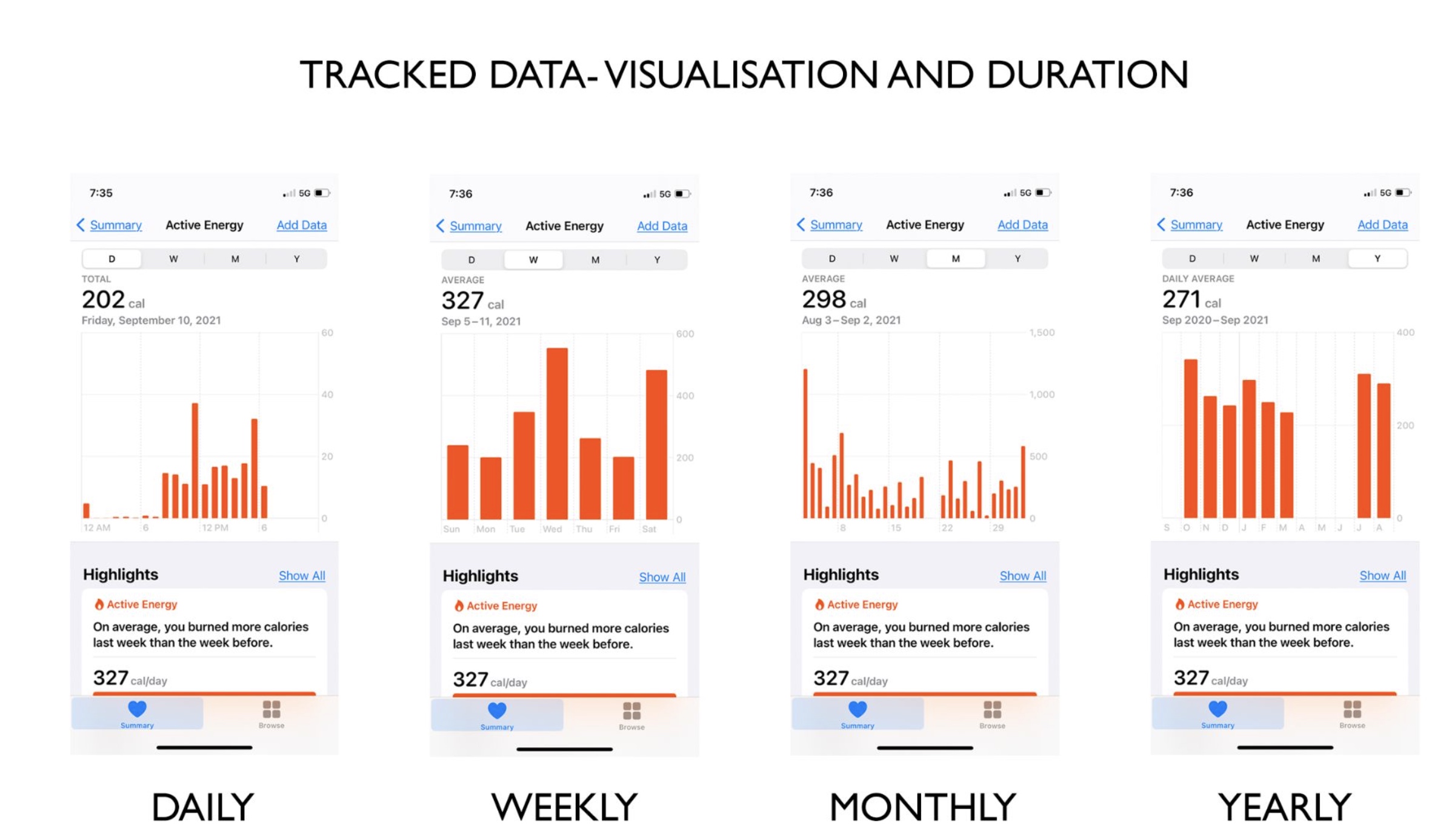
- Leaving a gap in the tracked data over time, which is crucial for appropriate analysis and action.
- Making users engage in a compensating mechanism based on their own judgement and assumptions- "Must have burned at least 1000 calories on that hike, I deserve this dessert."
- Leading to a drop in motivation to track and record fitness data over time, and hence, a drop in engagement with the application.
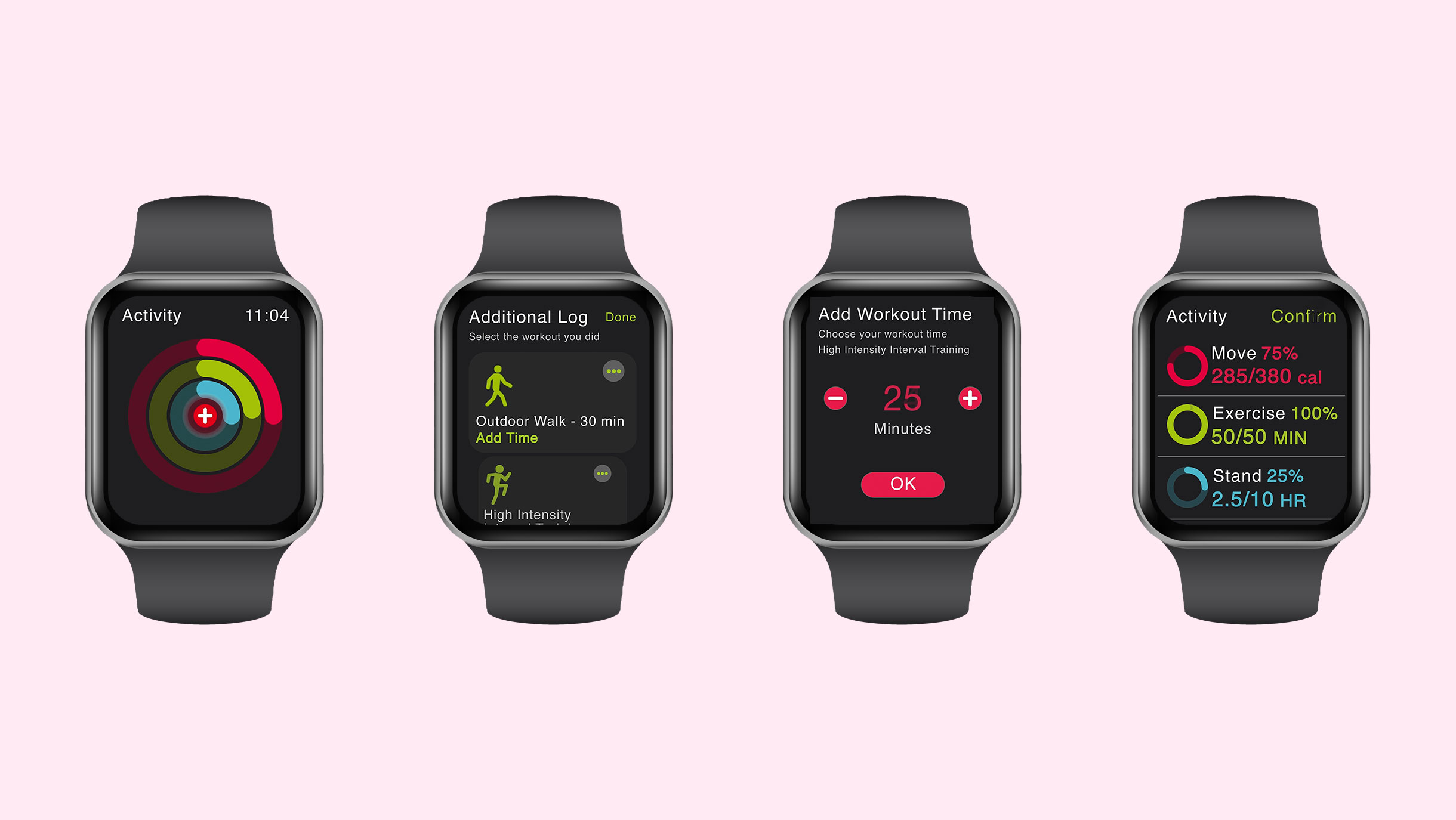
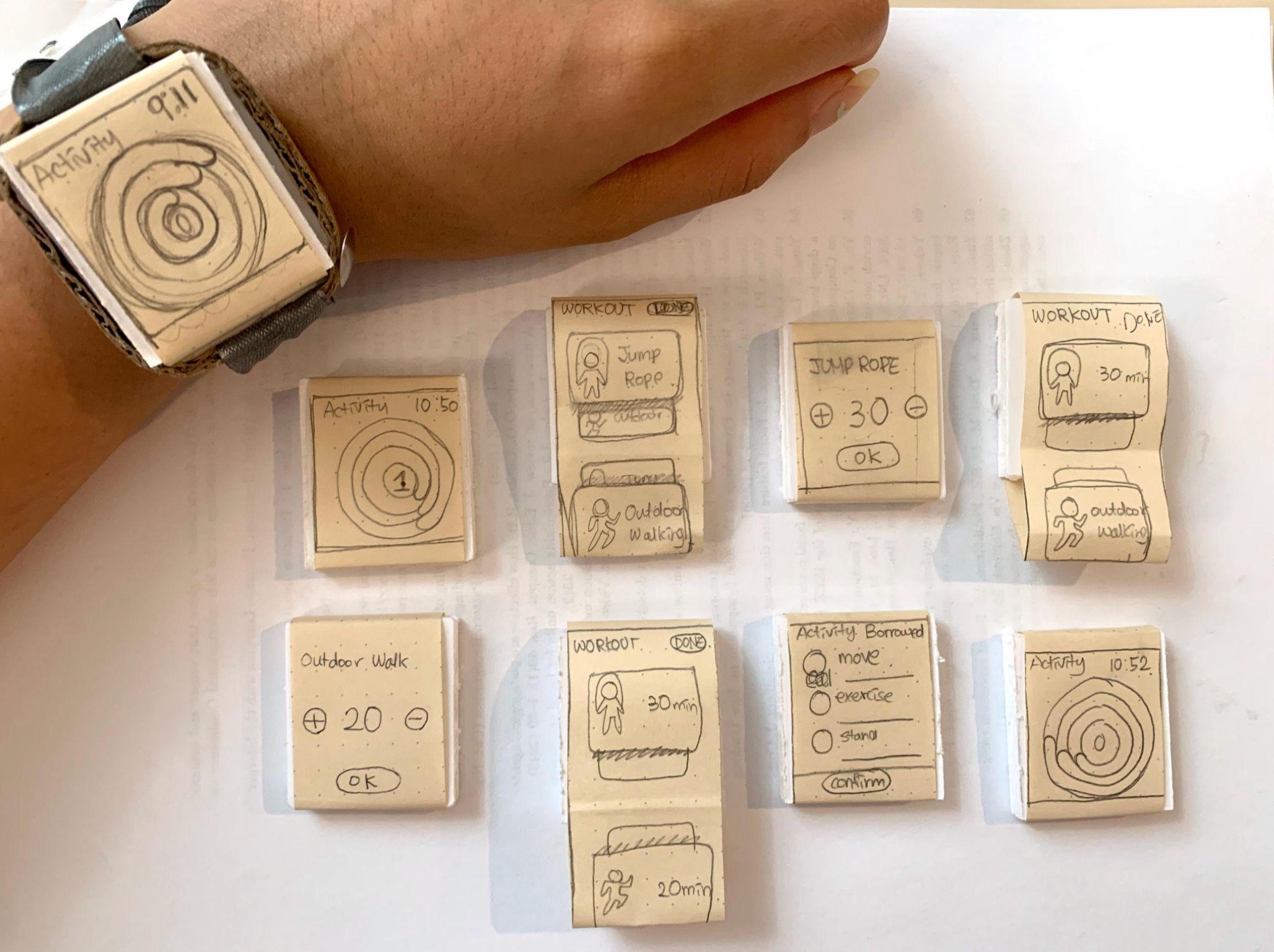
To tackle the same, we recommended a feature which would allow a user to log a missed workout, by mimicking data from a similar workout, for-
- Reducing the number of metrics to log manually- convenience.
- Increasing precision in tracked data, compared to the user's assessment of a forgotten incident.
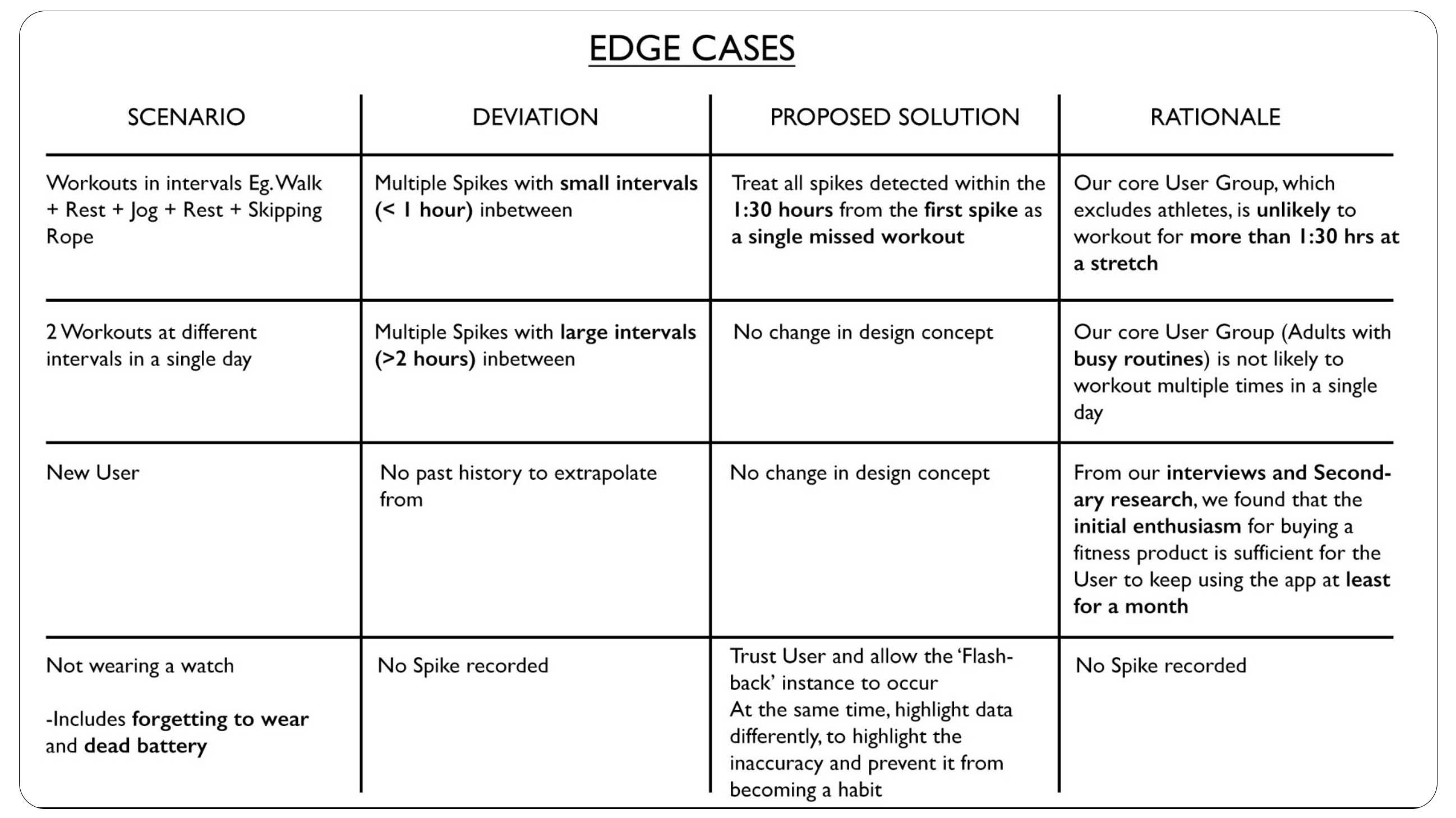
- Recording up to 3 instances of increased activity to remind the user about a missed log.
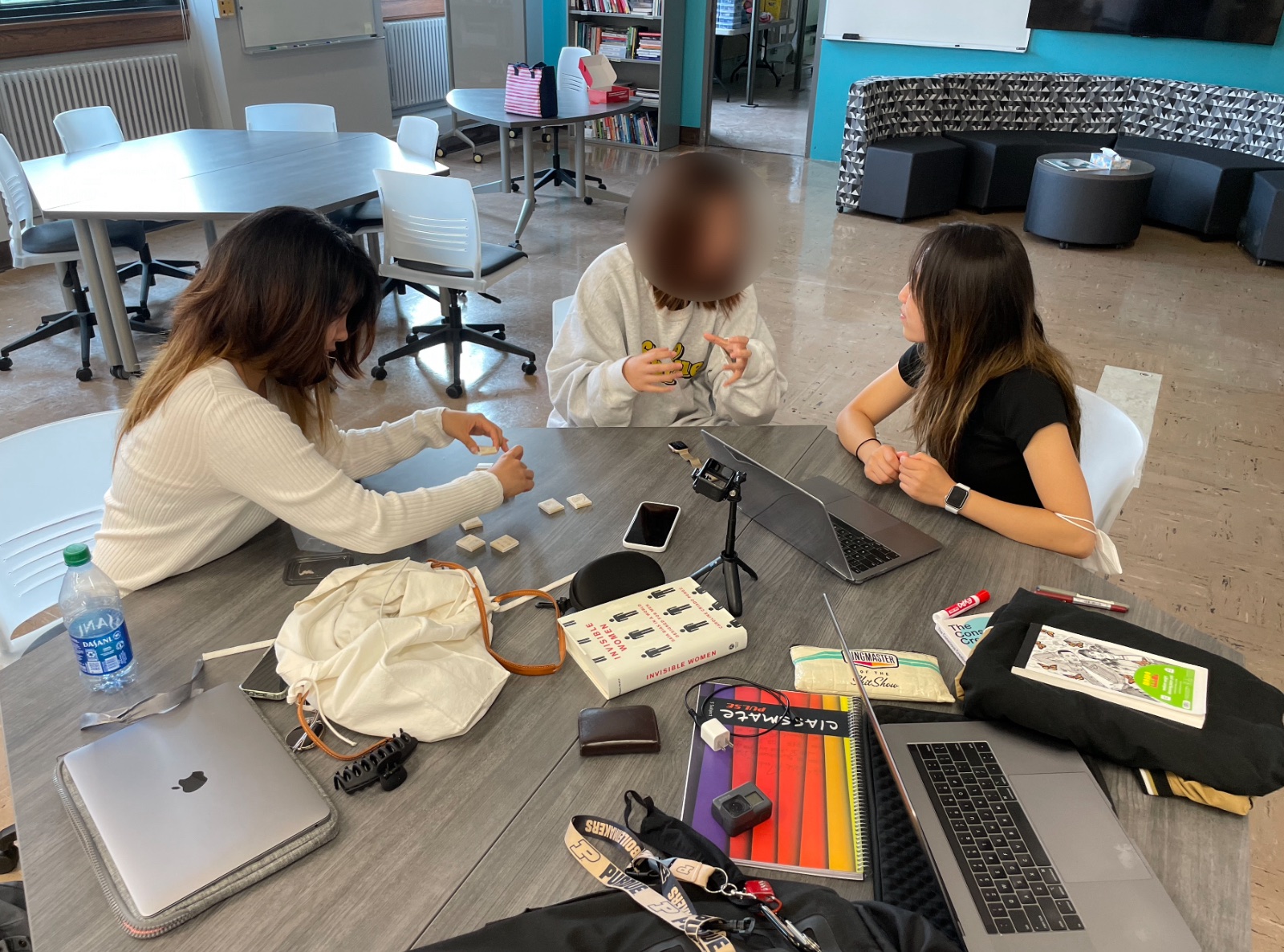
For an initial evaluation, we implemented our ideas through a paper prototype of the watch and made users go through it with the help of guided prompts, asking them to think out loud as they did. A member from the group acted as the watch, switching prototypes based on the user's presses, for this Wizard of Oz kind of testing.
Results
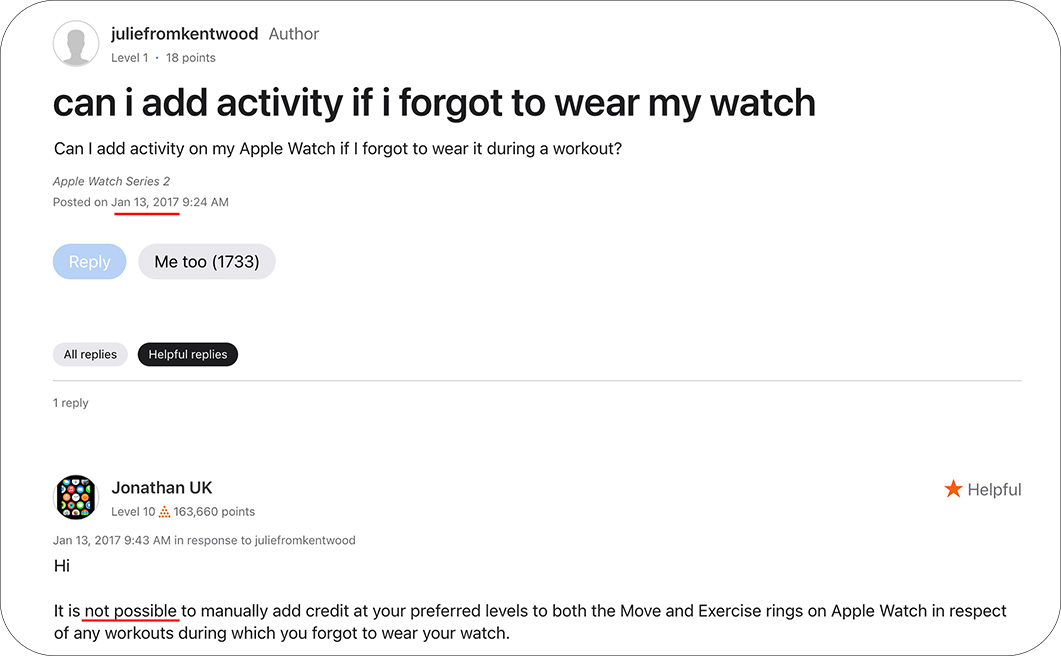
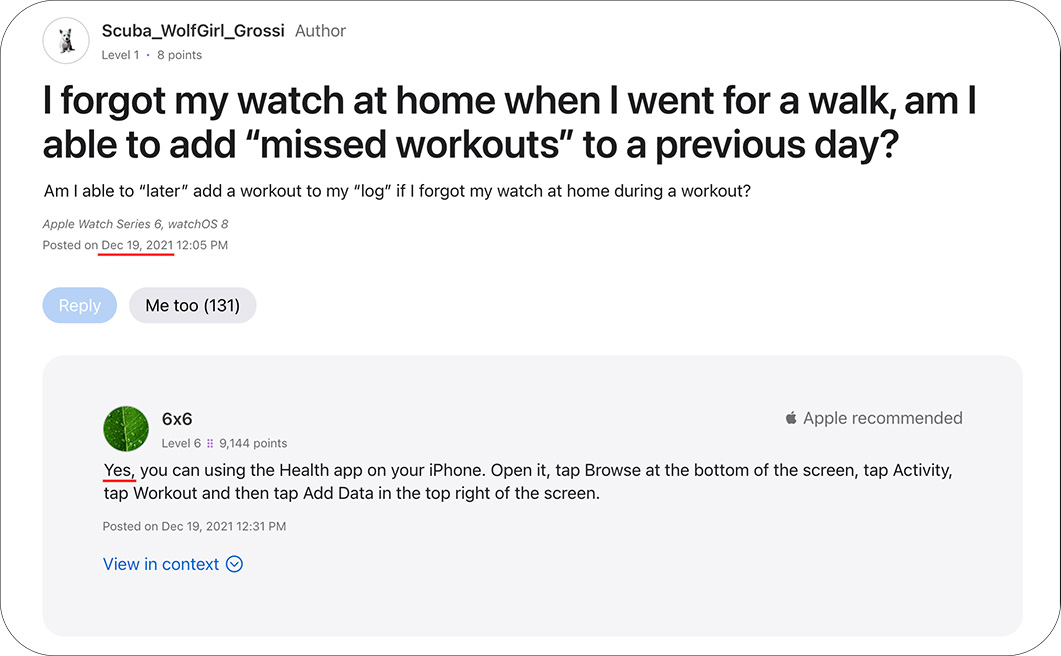
Our evaluation primarily revealed usability insights for our preliminary design, such as a need to highlight the notification bubble within the health rings for better cognition. It also revealed a general desire amongst users for personalization of UI to suit their individual needs, and a concern with the accuracy of data being copied from a previous workout. A happy ending to this project was the fact that Apple released a similar functionality in 2021, thus validating our identified space for intervention and our proposed solution.
Limitations in our proposed solution-
- Instances such as forgetting your watch at home, make it difficult to assess times of peak activity.
- The feature requires a dataset to build upon, i.e., users need to log their various workouts at least once, in order to be able to refer to them later.
- Does not solve the problem of fake-out instances wherein lack of fitness data is not the cause.